

- Your cart is empty Browse Shop
Saved Seed vs. Certified Seed: Which Should You Plant?
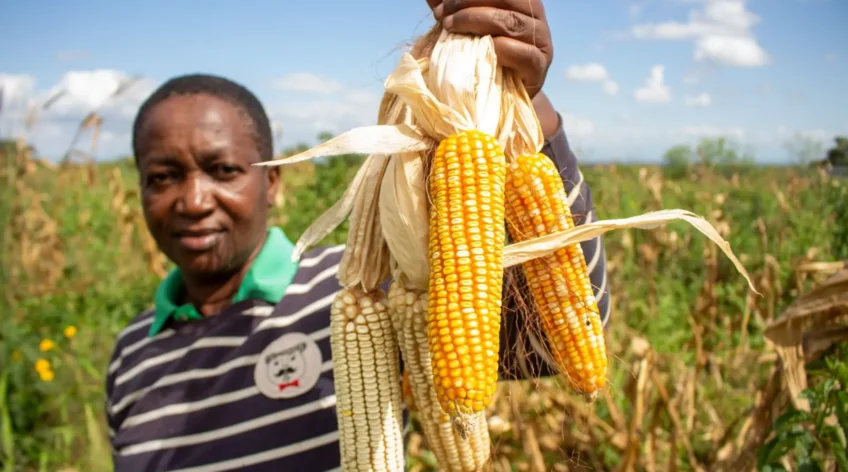
Every season you pick the best-looking cobs from your harvest, dry them carefully, and save the seed for next planting. You have done this for years, so did your father, and his father before him. It costs nothing, and it feels right.
But each generation of saved seed quietly loses something: vigour, disease resistance, yield potential. And your shrinking harvests are the receipt.
The Honest Difference Between Saved and Certified Seed
Most Ugandan farmers still plant seed saved from their own harvest. It is free, it is familiar, and it does not require a trip to town. Those are real advantages, and nobody should pretend otherwise.
But saved seed has a biological problem. When you save seed from a crop grown on your farm, you are saving whatever genes survived that season on your soils, including the weaknesses. Diseases accumulate in saved seed stock. Yields drift downwards over generations. And the drought tolerance or disease resistance that a good variety had when it was bred slowly disappears from your seed as generations pass.
Certified seed is not just ‘expensive seed’. It means something specific: the variety has been tested and approved, it is multiplied under controlled conditions so it stays true to type, and it meets standards for germination and purity. When you buy certified seed, you are buying the variety as it was designed to perform, at its full potential.
What You Can Actually Do About It
1. Try it on one plot, not the whole farm. This is the fairest way to judge: this season, plant certified seed on one plot and keep your saved seed on another. Same land preparation, same spacing, same care. Compare the two at harvest. Let the results make the argument, not the agro-dealer.
2. Ask for NARO-bred varieties by name. NARO develops varieties specifically for Uganda’s conditions (drought-tolerant maize, high-yielding beans, disease-resistant cassava) through its research institutes at Namulonge, Serere, Kigumba and others. Early-generation seed is multiplied by contracted seed companies and sold through registered agro-dealers. Go to your nearest NAADS-accredited agro-dealer and ask specifically for NARO-certified varieties for your region and season.
3. Know what the best varieties offer. For unpredictable short seasons, look for fast-maturing varieties: some bean lines developed with CIAT mature in around two months instead of three. For maize, drought-tolerant hybrids keep producing through moisture stress that would wipe out ordinary hybrids. Match the variety to the season you are actually expecting, not the season you wish you had.
4. Use the government partnerships where they exist. Uganda’s nucleus-farmer model lets participating farmers pay only about 30 percent of the seed cost, and pay it after harvest rather than upfront. Ask your district agricultural officer whether the nucleus-farmer or seed subsidy programmes are active in your area this season.
5. If you keep saving seed, save it properly. If you cannot or will not buy certified seed for every plot, at least protect the seed you save. Select from plants that performed best, not just the biggest cob you happen to see. Dry seed to the same standard as your grain (about 13 percent moisture), treat it against storage pests, and keep it in a sealed container in a cool, dry place. And refresh your stock with certified seed every few seasons. Think of it as upgrading the genetics of your whole farm.
6. Buy from approved sellers only. Fake and recycled seed is sold in open markets and unscrupulous shops every season. Buy from NAADS-accredited agro-dealers or cooperative supply points, and check that the package is sealed, labelled with the variety name, and carries the certification mark. If the price seems too good, it usually is.
7. Keep your own field records. They are the proof that seed pays. When you run the side-by-side plot, write down the basics: planting date, amount of seed used, bags harvested from each plot, and any problems you saw. Many farmers running this comparison find they cannot remember accurately by harvest time, and the record is what convinces a farmer group (or a lender) that it works. A simple exercise book kept in a dry place is a business tool, not paperwork. If you plant certified seed through a subsidy programme, keep the receipt and the package label too. Those small habits are how successful farmers turn one good season into a permanent change.
The Uganda Context
Uganda’s scientists have already done the hard part. NARO varieties exist that resist major diseases, survive dry spells, and yield significantly more than local landraces under the same management. The gap between what is available and what is planted is not a science problem. It is an awareness and distribution problem.
That gap is why projects like the World Bank-supported seed initiatives and the government’s nucleus farmer partnerships exist, to get early-generation seed into the hands of smallholders at a price and payment structure that makes sense. Every farmer who tries certified seed on even one acre helps build the local demand that keeps good seed flowing into their district.
What To Do Today
Before the next planting season, visit your nearest NAADS-accredited agro-dealer. Ask for NARO-certified varieties suited to your area, and buy enough for one plot only. Plant it beside your saved seed and keep your own comparison records. The harvest will speak for itself.
Tell a neighbour what happened at your next field day. One plot becomes five; five become a village.