

- Your cart is empty Browse Shop
Why Your Yields Are Falling and How to Fix It
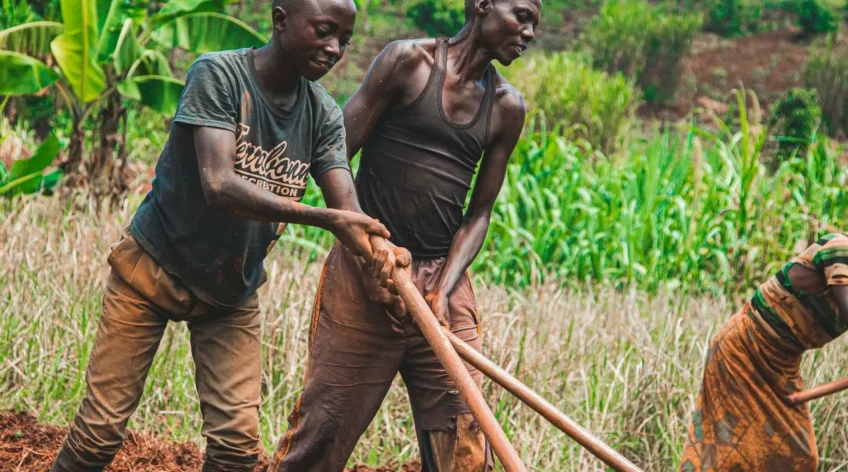
Ten years ago, this same acre gave you ten bags of maize. Last season it gave you four. You have not changed your effort. If anything, you work harder than before. What changed is the soil beneath your feet.
The land is not lazy. It is exhausted, and it has been asking you for nutrients it stopped getting years ago.
Why Your Yields Keep Dropping
About 30 percent of Uganda’s land is now considered highly degraded. In districts like Jinja, Kamuli and parts of the southwest, yields have fallen to below a third of what the same land produced a generation ago. The story is similar across most of the country.
Here is what happens. When you harvest a crop, you remove nutrients from the soil: nitrogen, phosphorus, potassium and organic matter leave the field in the harvest. When residue is burned, when nothing is put back, when the same crop is planted season after season, the soil slowly loses its structure, its life, and its ability to hold water and nutrients.
FAO’s soil management work in Uganda found that the usual smallholder practices (recycling crop residues, transferring biomass from elsewhere) are simply not enough to replace what continuous cultivation takes out. Rebuilding soil takes a deliberate, planned effort over two or three seasons. The good news is that most of what it takes costs almost nothing.

What You Can Actually Do About It
1. Learn to read your soil’s signals. Degraded soil tells you what is wrong if you know the signs. Water pools and runs off instead of soaking in. Plants look thin and yellow even when it rains. The top layer forms a hard crust you struggle to break with a hoe. Worms and insects are rare when you dig. Any two of those signs means your soil structure is failing, and it will not fix itself.
2. Start a compost pile this week. Compost is the single most powerful thing you can give exhausted soil. Build it in layers: dry material (crop residue, dry grass, banana leaves), then green material (kitchen waste, fresh weeds, animal manure), then a thin sprinkle of soil or ash. Keep it as damp as a wrung-out cloth and turn it every two to three weeks. In about two months it will turn dark, crumbly and sweet-smelling. That is the organic matter your soil has been missing. Spread it before planting and work it into the top layer.
3. Never plant the same crop family twice in a row. Rotation is old knowledge but most farmers have stopped doing it properly. A simple three-crop rotation that works across most of Uganda: season one: a cereal (maize or sorghum); season two: a legume (beans, groundnuts, or cowpeas); season three: a root or vegetable crop (cassava, sweet potato, or a leafy vegetable). Legumes pull nitrogen from the air and leave it in the soil. Root crops break up hard layers. The pests that attack one crop starve when you plant a different family next season.
4. Keep the soil covered, all the time. Bare soil is dying soil. The sun bakes it, rain beats it, and wind strips it. Mulch with crop residue, dry grass or banana leaves. You do not need to cover everything at once. Start with the strips between your rows. Covered soil stays cool, absorbs rain instead of losing it to runoff, and feeds the worms and microorganisms that make nutrients available to your crops.
5. Stop burning your residue. This is the one rule with no compromise. When you burn crop residue, you are burning the exact organic matter your soil is starving for. The flame gives you two minutes of clean field and takes away a season’s worth of soil food. Chop it, spread it, or feed some to your livestock and return the manure. Anything but fire.
6. Test your soil. It costs less than you think. A basic soil test through your district agricultural office or a NARO station tells you exactly what your soil is missing, so you stop guessing. Take samples from 10 spots across your plot, mix them in a clean bucket, and submit about half a kilogram. If you have never tested, do one field this season. What you learn will change how you spend your input money for years.
The Uganda Context
Uganda’s National Development Plan and the Ministry of Agriculture both treat soil degradation as a national food security issue. Studies across the banana-maize systems of central and western Uganda show that farms which add organic matter (through compost, mulch and manure) recover a significant share of their former yields within two to three seasons, without expensive fertiliser.
Chemical fertiliser has a place, but it is the wrong first tool for exhausted soil. Fertiliser feeds the plant; compost feeds the soil that feeds the plant. On degraded land, fertiliser without organic matter is like medicine without food. It helps a little, then washes away with the first heavy rain.
What To Do Today
Start a compost pile this week. Find a corner of the compound, gather your dry and green materials, and build the first layer. It costs nothing, and by next season your soil begins to recover. Then walk your field and decide which plot gets the first rotation change.
Pass this article to a farmer who is confused about why their harvest keeps dropping. The answer is usually in their hands, not in the sky.