

- Your cart is empty Browse Shop
Fall Armyworm: What Works When Pesticides Fail
You sprayed last Tuesday. The armyworms were back in your maize by Friday morning, chewing through the young leaves like nothing happened. So you sprayed again. And they came back again.
You are not using the wrong chemical. The fall armyworm has simply stopped responding to the chemicals that used to kill it. This is happening on farms across Uganda right now, and it is why the country’s scientists are telling farmers to change the whole approach.
Why the Old Strategy Is Failing
Only about 6 percent of Ugandan farmers use pesticides at all. But among those who do, the pattern has become dangerous: when a spray fails, the instinct is to spray more, spray stronger, or spray a cocktail of products. Each of those responses makes the problem worse.
The fall armyworm breeds fast (a generation every few weeks) and its survivors pass on whatever made them survive. Spray the same class of chemical season after season and you are not controlling the pest. You are breeding a tougher one. Meanwhile, the chemicals also kill the natural enemies (the birds, wasps, and beetles) that were quietly eating armyworm eggs for free.
There is a better way, and it is not a single product. It is a set of practical habits called Integrated Pest Management (IPM) and the farmers who use it spend less on chemicals and lose less maize.

What You Can Actually Do About It
1. Scout early and know what you are looking at. The fall armyworm has a mark that is easy to learn: a pale, upside-down Y on the front of its head, and four dark spots in a square on its back. The moth lays eggs in clusters on leaves, often with a fuzzy covering. The young caterpillars hide deep inside the funnel of the plant (the whorl) where sprays rarely reach. Walk your field twice a week and check 10 plants in 10 different spots. Once you can name what you are seeing, you can act on it.
2. Work with the natural enemies instead of against them. Uganda’s research stations have shown that biological control works. Trichogramma wasps (tiny parasitic wasps) lay their own eggs inside armyworm eggs, stopping the next generation before it hatches. The Ministry of Agriculture and NARO run programmes to release them in affected districts. Ask your extension officer whether Trichogramma or other natural enemies are being introduced in your area. And stop spraying broadband insecticides when you do not need to. They kill these allies first.
3. Break the cycle in the soil. When the season ends, the armyworm pupates in the top layer of the soil. Ploughing deep after harvest exposes the pupae to birds, sun and soil fungi. Crop rotation does the second half of the job: never plant maize on the same plot season after season. A cereal-legume rotation starves the pest of its favourite plant for a whole season.
4. Plant a system the armyworm dislikes: push-pull. Scientists developed push-pull cropping specifically for African smallholders. Plant Desmodium between the maize rows (its smell pushes the armyworm moth away) and plant Napier grass on the field borders to pull the moth away from the maize. The system also fixes nitrogen in the soil and gives you livestock fodder. It is a bigger change, but for farmers who have battled armyworm for several seasons it is one of the most proven long-term answers.
5. Spray only when the numbers say so, and spray correctly. When chemicals are genuinely needed, use them as one tool among several. Identify the pest first. Use a product registered for fall armyworm, at the labelled rate, not a guess. Target the whorl of the plant, where the caterpillars actually are. And rotate the chemical class between sprays so resistance does not build. Your extension officer or agro-dealer can show you which products are approved.
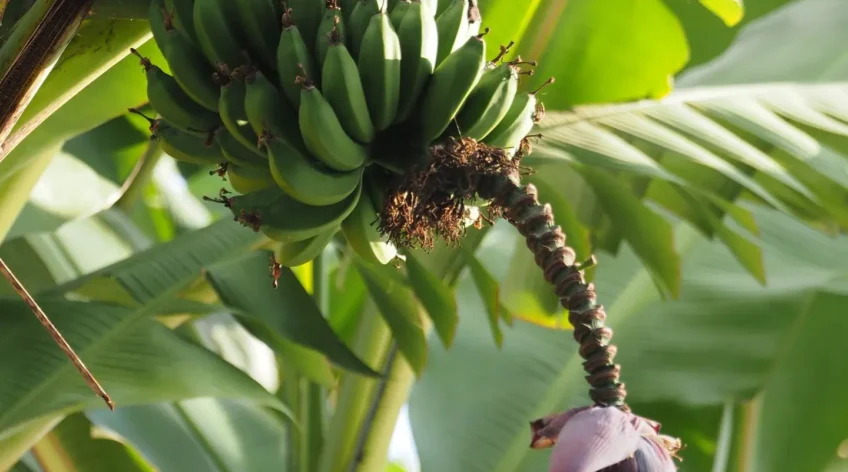
6. Watch your bananas too. If you grow bananas, learn the signs of Banana Xanthomonas Wilt: yellowing and wilting leaves, and fruit that ripens unevenly and early. An infected stem must be cut and buried or chopped within hours, not left standing, or the bacteria spreads to your neighbours’ gardens. It is one of the fastest-spreading crop diseases in Uganda, and every day of delay matters.
The Uganda Context
Uganda loses an estimated USD 35 to 200 million every year to pests and diseases in the banana crop alone. Coffee wilt and banana Xanthomonas wilt have been partly controlled, but new threats keep emerging, like the coffee twig borer and the changing generations of fall armyworm. The lesson from every one of these outbreaks is the same: by the time the problem is visible in your field, the cheapest moment to act has already passed.
This is why the Ministry of Agriculture and NARO continue to push IPM. It is not organic ideology. It is risk management. A farm that depends entirely on one chemical is one bad spray away from losing the season.
What To Do Today
Walk your maize field today. Check 10 plants in 10 spots and look inside the whorl. If you find armyworm, act within three days. That is the window when the damage is still recoverable. Then call your extension officer and ask about the biological control programmes running in your district.
Share this guide with every maize farmer you know. One untreated farm can reinfect a whole village.